
SPECIAL REPORT: Medicine at risk
A special report on environmental and social threats to the survival of traditional medicines.
Dec. 17, 2023
Changing environment threatens traditional medicines
Climate change, clear-cutting and other environmental threats are impacting medicine supplies for a health centre that offers traditional healing.
by Belinda Nelson
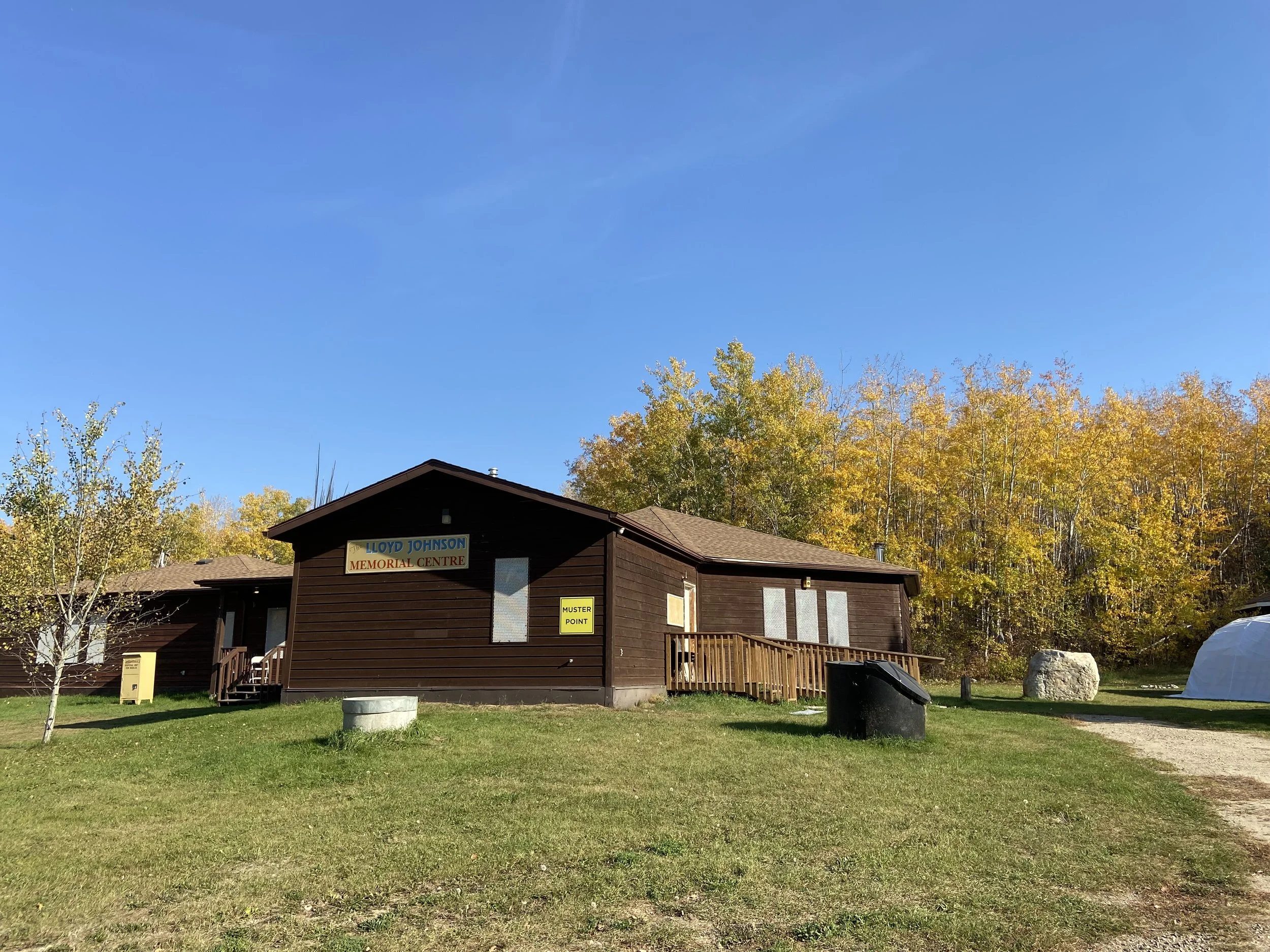
Sturgeon Lake Health Centre
Climate change, clear-cutting and other environmental threats are impacting medicine supplies for a health centre that offers traditional healing.
“The climate change has really impacted our medicines,” says Norma Rabbitskin, senior health nurse at the Sturgeon Lake Health Centre.
“We will have abundance for one kind (of medicine), but then the other one, it is not growing. Weather, heat, how short our summers are, it really affects the growing time and then sometimes it just affects the following year,” she explains.
Like most health centers, SLHC provides access to care with a doctor, referrals to the doctor, home and community care services, community health programming and nursing care.
But the centre also offers traditional health care, including access to healers, traditional medicines, cultural practices, ceremonies and referrals to Elders and healers.
“Our connection to the elements impacts us and our spiritual health”, says Rabbitskin. “It’s creating that relationship, with the plant world and the animal world, and the water, all of the elements. It’s working with those connections and our connection to Mother Earth and the universe.”
Rabbitskin practices in both worlds. She grew up in Big River First Nation with her traditional Cree family. Her family history is one of medicine people, both sides of her family were healers. Naturally, when she grew up, she became trained as a nurse.
She is also committed to honouring the miyomahcihowin way of life in health care, which understands the interconnectedness and balance to all things and relies on naturally harvested medicine.
“We harvest locally around here,” says Rabbitskin.
Sturgeon Lake First Nation has set aside land for cultural reasons, and community members do gathering deeper in the forest.
The health centre also hosts regular medicine camps.
“We have a number of students who have taken traditional medicine training with our teacher, who is Cathy Bird…We have about 25 that went through that. Every few years we send students. We try to build local capacity,” says Rabbitskin.
Yet that local capacity is stressed by a changing environment.
In addition to climate change, Rabbitskin is concerned about clear-cutting and contamination.
“These companies that are cutting down the trees, and then they’re robbing all the rich minerals, right and it offsets the ecosystem, so that also affects the water,” she says.
CLIMATE CHANGE AND HEALTH: MAKING THE CONNECTION
by Belinda Nelson
Climate change affects everyone but, for Indigenous people, it impacts their miyomahcihowin way of life — a way of life that has an interconnectedness and balance to all things.
The burning of fossil fuels and deforestation are the main contributors to climate change, leading to increased greenhouse gas emissions and significant alterations to the natural landscape.
The warming of the planet extends the growing season. The timing of conditions for suitable plant growth increases.
Warmer temperatures also lead to earlier flowering and leafing in plants. This interrupts the blooming of flowers and the arrival of pollinators, impacting plant reproduction.
Increased forest fires affect water quality by producing carcinogens. Water is considered a medicine as well.
To Sell or Not To Sell
A Regina business makes the choice to not sell sacred medicines
By Randi LaRocque
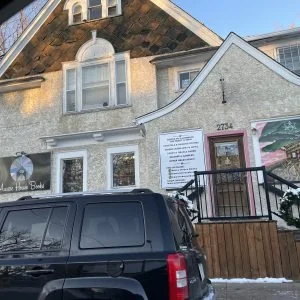
Aware House Books. Photo by Randi LaRoque.
In a media-connected age, Indigenous culture, medicines and practices have caught plenty of non-Indigenous people’s eyes.
One outcome is widespread cultural appropriation combined with the rise of using and commercially selling Indigenous traditional medicines and plants.
The owners of one Regina shop decided to step away from this trend.
Aware House Books opened in Regina in the 70s and remains in the business of selling books and goods related to spiritual enlightenment. In the past, sage and cedar, considered sacred medicines by many Indigenous cultures, could be found on its shelves.
The store has changed ownership over the years and is now owned and operated by Tammy and Aimee Chammartin.
In March of last year, they decided to stop the commercial sale of Indigenous medicines.
Before they stopped the mother-daughter duo were receiving mixed messages from customers.
“There were many customers, Indigenous and otherwise, who were happy to find it at our store,” said Aimee Chammartin. “They didn’t necessarily have access to it in other places. We did have some negative feedback from time to time.”
This got them thinking about the plants and their significance to Indigenous people and questioned their position.
“Should we be carrying these, or not?” says Aimee.
Traditional Indigenous medicine has begun to be over-picked for commercial purposes. An example is sage, renowned for positive spiritual and health benefits.
Because of this, sage has grown in demand and has been harvested and used incorrectly by non-Indigenous people.
"We did what we felt was the most respectful thing, regardless of what others may think."
Commercial pickers may not leave any to regrow by over-picking, which contradicts the Indigenous belief that the plant is alive and has a soul.
Before they decided to stop selling sacred medicines, co-owner Tammy Chammartin says they tried to source from local Indigenous people.
“We did make a conscious effort to attempt to be more respectful in our sale of it,” she said. “An example is where we were sourcing it from, that it was coming from Indigenous pickers and Indigenous medicine growers (and) just trying to learn more about the tradition of it that way.”
“We did try to work with people with whom we felt had their hearts in the right place,” Aimee added.
Still, after meaningful conversations with Indigenous people, they realized more needed to be done.
Aware House Books announced on its Facebook page on March 15, 2022, that it would remove traditional Indigenous medicine from its shelves after consultation with the local Indigenous communities around Regina.
“Effective immediately, we have made the decision to no longer carry these medicines in our store,” the Facebook post stated.
“We had to get serious,” says Tammy.
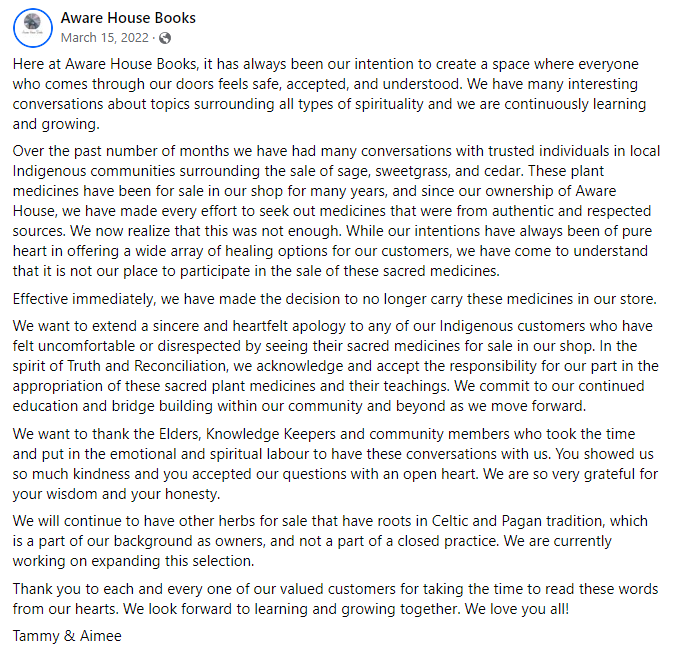
The store’s announcement on social media.
The move comes at a critical time.
With the rising demand for sacred medicines, traditional harvesters are worried about misuse and damage to picking spots by people who have no idea how to harvest and appropriately use such medicines.
Reactions to the Facebook post were “overwhelmingly positive,” says Aimee.
Yet not every customer is happy.
“Some people are a little confused, and the odd person seems to be a bit disgruntled that they can’t buy and don’t understand why,” says Tammy.
Having learned why the exploitation of sacred medicines is harmful, Aware House Books is now sharing that knowledge with its customers.
The store now sells herbs from Pagan and Celtic cultures. The two have backgrounds in that culture and it is not from a closed culture.
"We did what we felt was the most respectful thing, regardless of what others may think,” says Tammy.
Reconnecting with Mother Earth
Toby Desnomie shares Indigenous wisdom for healing and harmony
By Kuaile Wei
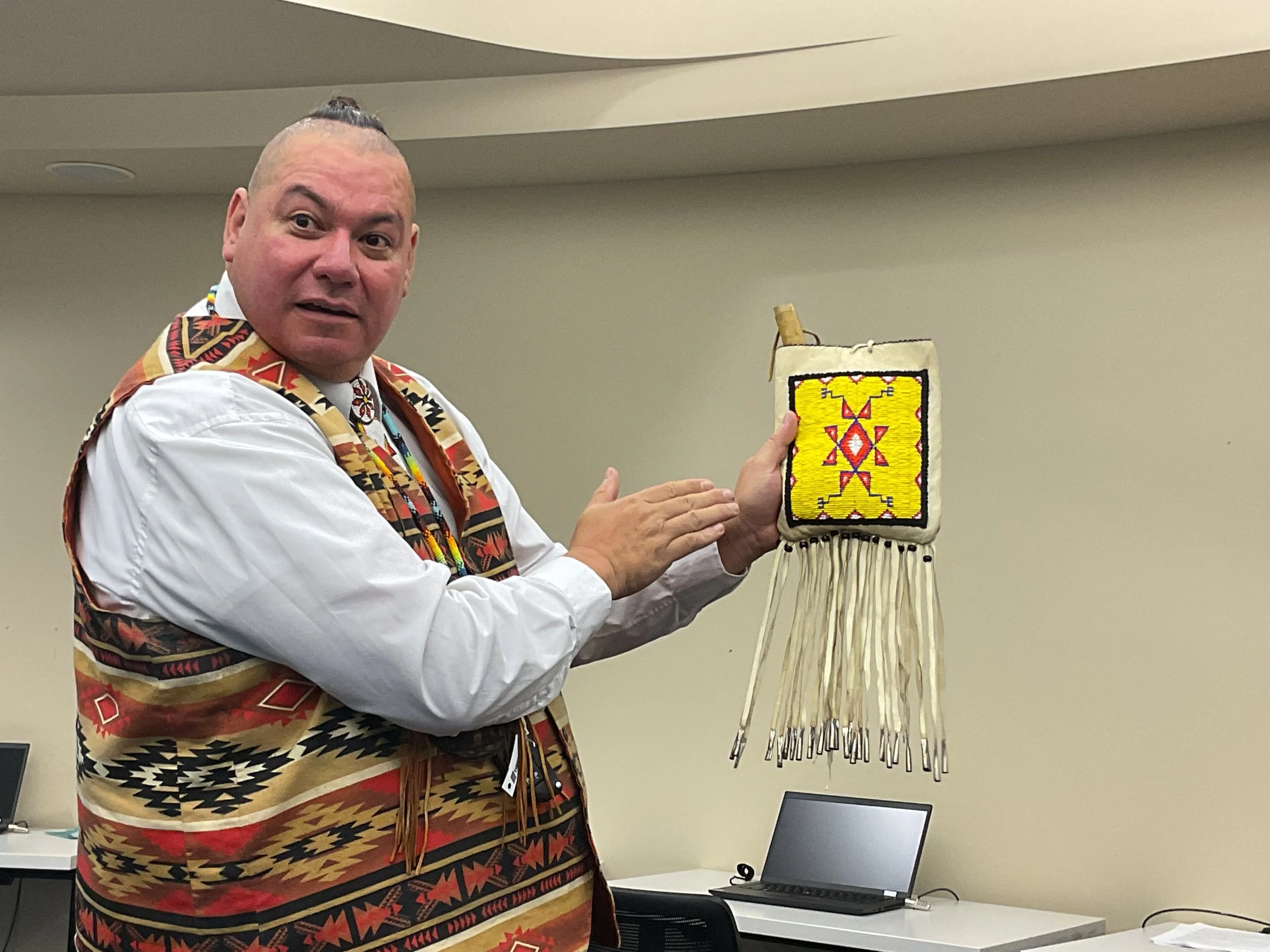
Toby Desnomie sharing Knowledge with FNUniv students. Photo by Kuaile Wei.
When Toby Desnomie visits a classroom, he brings a chest of sacred items and a wealth of knowledge to share.
The Knowledge Keeper and traditional healer from Peepeekisis First Nation begins with the story of his own family.
He has traced his family back 400 years to the Great Lakes region, where they married into the Menominee, an Algonquin Nation.
The Menominee were known as the Wild Rice People “because half of our understanding was planting and growing food (and) having a village,” he explains to a group of Indigenous Communication Arts (INCA) students.
“The other half was hunting off the land, and we’re really known for domesticating animals.”
This experience has been handed down through the generations, as they grew and expanded to other parts of Turtle Island.
“So over the 400 years, our family seeing Mother Earth and all the different events that took place within that 400 years, a lot of things happened,” he says.
Today, Desnomie operates a healing lodge at Peepeekisis called Mother Earth Medicine, where he shares his family’s connection to the land and their traditional practices of healing.
Desnomie emphasizes the importance of maintaining a harmonious relationship with all living beings.
“How do you think you can domesticate an animal?” he asks the class.
Students offer up ideas like food, shelter and caring for the animal.
“Relationship,” summarizes Desnomie, nodding yes to their answers.
“You see, having a relationship isn’t just within humans, tapwe. When you have a relationship, in our view, you have a relationship with all things light and sound.”
Desnomie explains that connecting fully with all living beings, understanding their vibrations and needs, is essential for coexistence.
The Menominee were known for domesticating the moose. The moose pulled things like horses, and were ridden by women, he says.
Growing food was also central to the culture. For Desnomie and his community, food is seen as medicine.
“Food isn’t for comfort. Food is a necessity for medicine. Whatever goes in here,” he says, pointing to his mouth, “is going to make this body do a certain thing, tapwe. So we know that as a fact: food is medicine.”
Desnomie’s father shared his vision of creating a place where people could heal their minds, spirits, and bodies using the natural world.
Inspired by his father, Desnomie established Mother Earth Medicine on 160 acres of land. Here, he combines traditional Indigenous knowledge with modern practices to create a holistic approach to well-being.
The goal is to “heal our mind, our spirit, our body,” he says.
Desnomie emphasizes the power of the mind in healing “so we energetically have a good life.” He believes that one’s thoughts and beliefs shape their reality and can influence their health.
“We didn’t have hospitals, and all these things. We had the natural world, and we knew how to use that natural world to coincide with who we are. Because the mind is that medicine, whatever you think you are, that’s what you are,” says Desnomie.
He teaches that healing begins with putting medicine down to create a sacred space to “activate all our medicine.”
While he speaks, students from other classes drop in to hear his words. He arranges them in a circle and shares teachings about the Four Directions, which he says must be understood above all.
Using the wisdom passed down through generations, he teaches people how to tap into their own healing abilities by connecting with the elements.
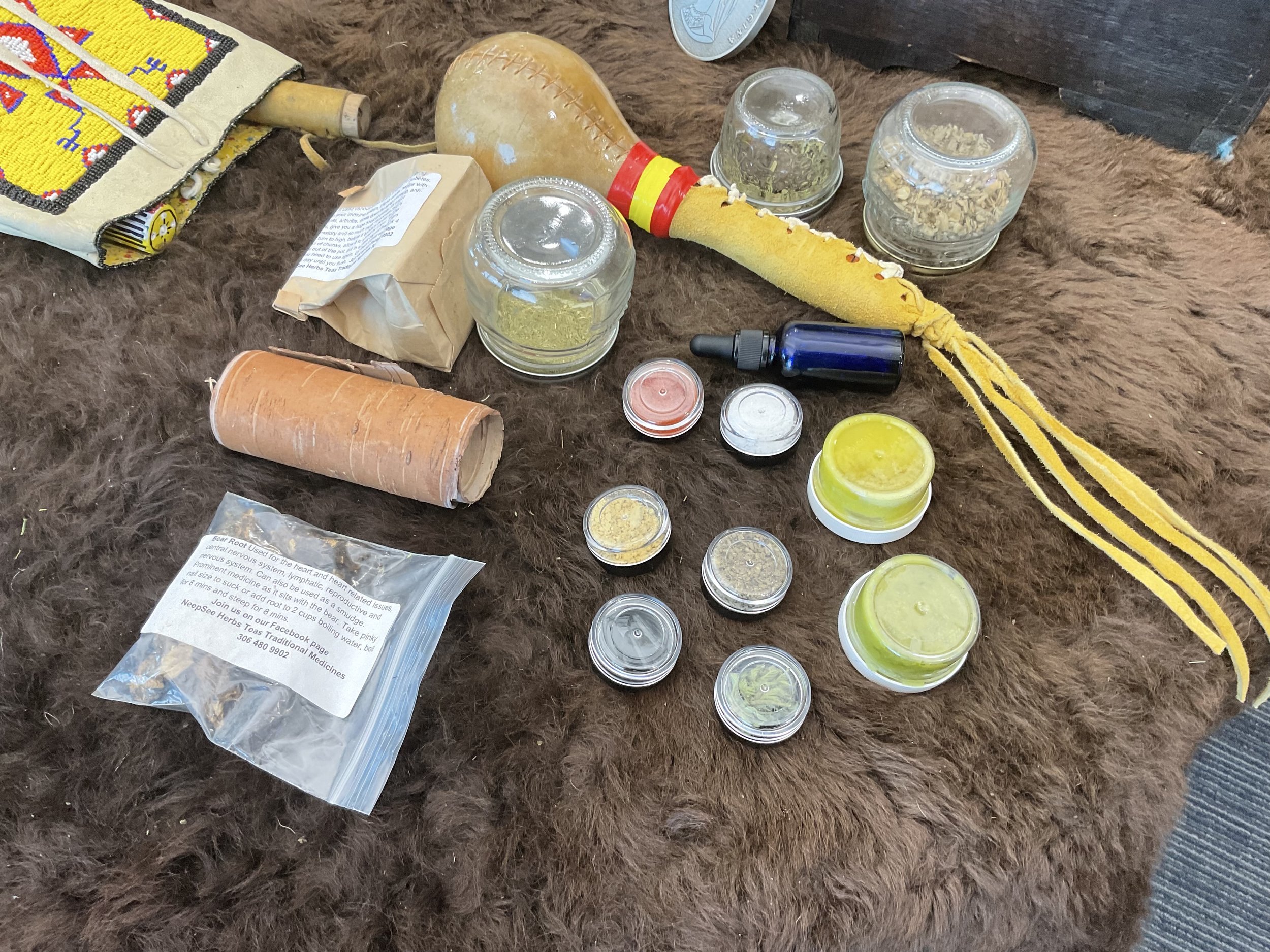
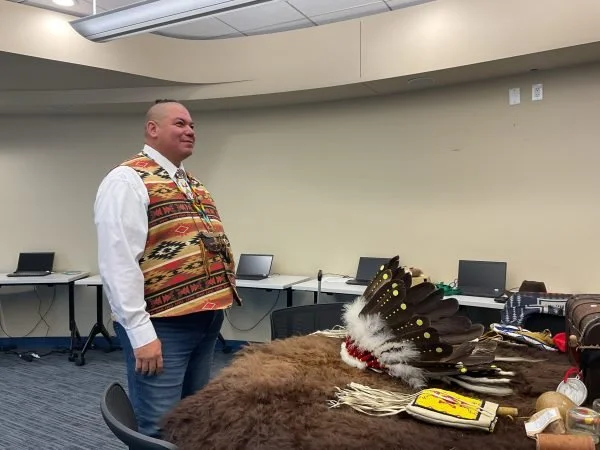
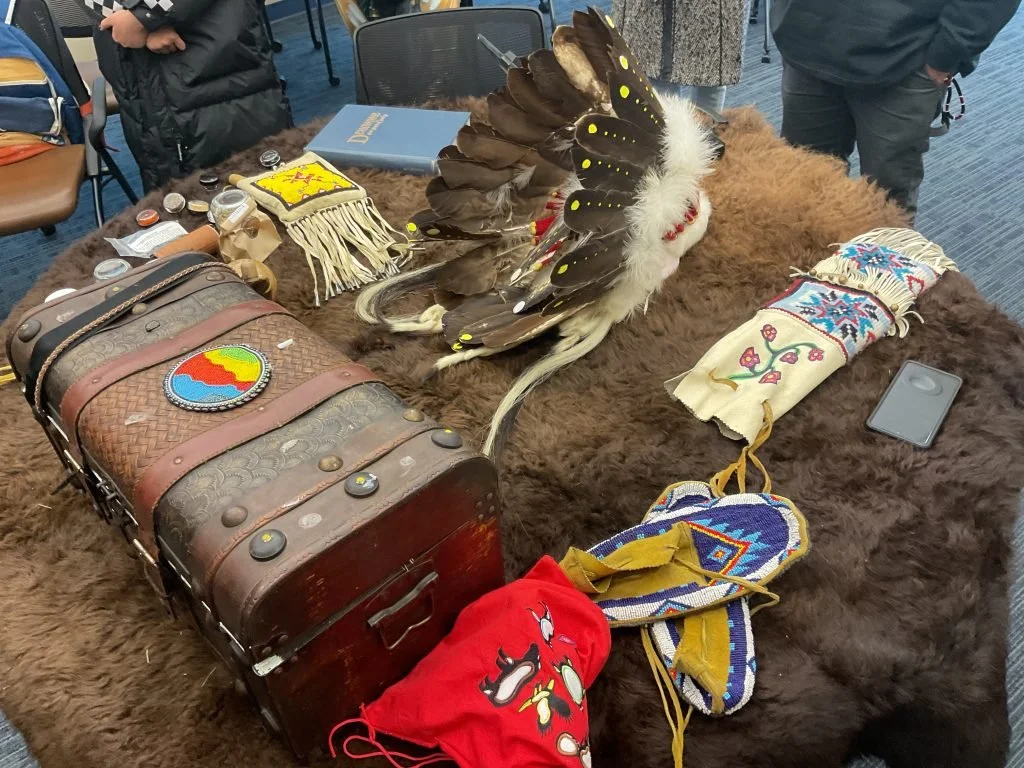
The Four Sacred Medicines
Although specific practices may differ, these four medicines are considered sacred by many Indigenous cultures.
Photo Gallery by Axin Xie
Thank you to FNUniv oskapewis Roland Kaye for sharing the plants photographed.
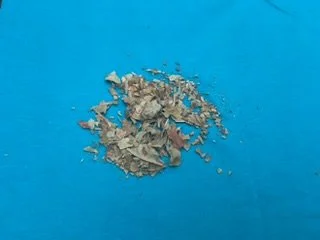
TOBACCO is given to a healer or Elder when one asks for their assistance or advice. The Creator gave the gift of tobacco to open the doorway to the West - the spirit world and it opens up the door to allow that communication to take place. Tobacco stands first among medicines, because it is placed on the ground with prayers before picking other plants. It does not grow naturally in Saskatchewan, but has long been obtained by trade for ceremonial purposes.
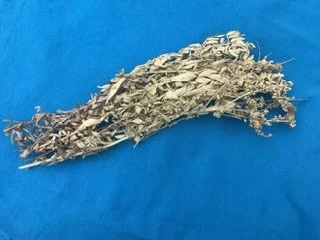
SAGE is a woman’s medicine, conferring strength, wisdom and clarity of purpose. This powerful purifying medicine drives away negative energies.
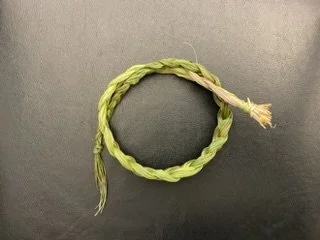
SWEETGRASS is the sacred hair of Mother Earth. Its sweet aroma reminds people of the gentleness, love and kindness she has for the people.
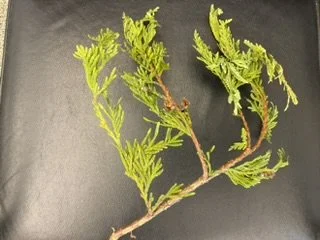
CEDAR is used for purification and to attract positive energy ,feelings, emotions and balance. Cedar is burned while praying. The prayers rise on the cedar smoke and are carried to the Creator.
‘Medicine at Risk’ was produced by students in partnership with Eagle Feather News during the Fall 2023 INCA 291 class. The project was supported by the Business and Higher Education Roundtable, an opportunity coordinated by Luther College’s Nonprofit and Voluntary Sector Studies Network. Supervising instructors were Kerry Benjoe and Patricia Elliott.