
“Long overdue” Indigenous veterans monument unveiled
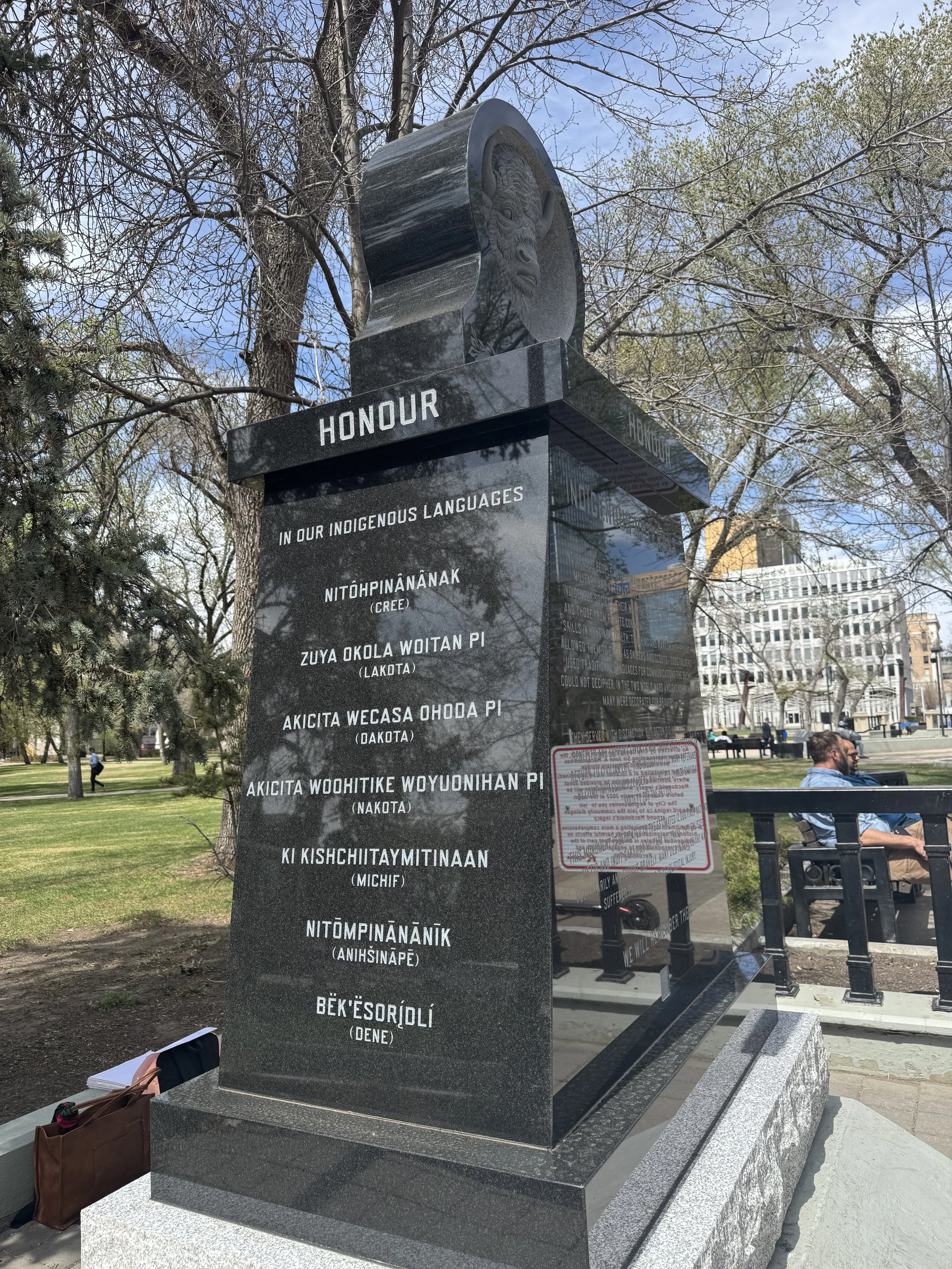
The Indigenous Veterans Monument was unveiled May 3 in Regina’s Victoria Park. Photo by Naomi Ryder.
May 10, 2025
By Naomi Ryder
In an act towards Truth and Reconciliation, the Indigenous Veterans Monument was unveiled May 3 in Regina’s Victoria Park, honouring an estimated 12,000 First Nations, Inuit and Métis veterans who served in World War I, World War II and the Korean War.
It’s long overdue, according to Brad Hrycyna, president of the Royal Services Institute Regina and chair of the Indigenous Veterans Monument Committee.
“Years ago, I learned about how poorly treated our Indigenous veterans were when they were released from the military, and it made me mad,” said Hrycyna. “I’ve always wanted to do something about it but never had the resources.”
Hrycyna got the ball rolling two years ago. He and the volunteer committee applied for a grant through Veterans Affairs Canada and began fundraising.
Along with Crown corporation sponsorships and private donations, the committee finally secured enough funds to build the monument.
Indigenous veterans have always been highly honoured and remembered within their own communities.
“Indigenous Peoples were here defending this land way before colonization,” said Corporal Nathaniel Merasty of the Royal Regina Rifles, who is also a fourth-year business studies student at First Nations University of Canada.
Some 8,000 Treaty First Nations men and women signed up for Canada’s military during the two World Wars, including over 500 from Saskatchewan First Nations, according to a report by the Saskatchewan First Nations Veterans Association.
Although precise records weren’t kept, it’s estimated several hundred Indigenous people served in Korea, including at least 13 Saskatchewan First Nations veterans.
Many of the veterans were decorated for their bravery and ingenuity in the field. But when they returned home, it was a different story.
“Most of our Indigenous veterans did not get the same treatment and rights as our non-Indigenous comrades,” said Cpl. Merasty.
Many were denied the same benefits and supports non-Indigenous veterans received, according to a statement posted on the website of Edmonton’s ReconciliACTION Team.
Often, Indigenous veterans were only given direction to go home after the wars, and subject to enfranchisement – the legal process used to take away an Indigenous person’s Indian status.
First Nations veterans returned to find their Indian status taken away and their land given to non-Indigenous people.
Métis veterans were similarly denied benefits they had been promised, according to the Metis Veterans’ Legacy Program. “Many of them were discriminated against by Veterans Affairs Canada and denied an economic foundation to rebuild their lives upon return home,” the program’s website states.
In response, the vets began organizing and demanding justice for themselves and all Indigenous people.
“Our Indigenous veterans had to fight for our rights in the Great Wars to get Canada to recognize that we would give our lives for their conflicts in another land, which led them to amend or adjust the Indian Act,” said Cpl. Merasty.
It was not until the early 2000s that the Canadian government began to give First Nations veterans benefits that had been previously denied.
In August 2024, Veterans Affairs Canada provided a one-time $20,000 recognition payment to living Métis veterans who served in World War II.
“I respect and acknowledge the newly erected monument at Victoria Park, and it’s another step in our healing and Reconciliation journey,” said Cpl. Merasty.
“We are all walking as Indigenous Peoples of this Treaty Nation and I hope the same action can be done in other parts of our Turtle Island.”
The monument committee’s work not only honours history, but draws attention to issues still faced by Indigenous veterans today.
“Lots of people are going to see it. Lots of people are going to learn about the injustice of the way we treated our Indigenous veterans,” Hyrynca said.
The monument can be seen near the cenotaph in Victoria Park in downtown Regina.